Two-face
Front and back, rich text on both sides — the baseline.
Card types that ask the way your subject does, scheduled just before you'd forget. The first 50 seats decide what ships next.
Click the card or press Space to reveal
auto-plays · pauses on hover
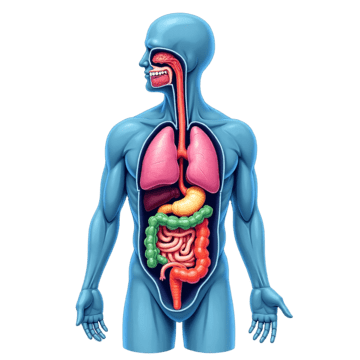 Lungs Stomach Intestines
 One region uncovered at a time; the rest stay masked, so each answer is recalled in its own context.
The cerebellum coordinates balance.
One card per blank, each on its own schedule.Blank a phrase as you write it — no second authoring step.
| N-dimensional | Present | Preterite |
|---|---|---|
| yo | hablo | hablé |
| tú | hablas | hablaste |
| él / ella | habla | habló |
One note, a card per cell — each on its own schedule.
Front and back, rich text on both sides — the baseline.
Blank a phrase as you write it — one card per blank.
Mask a diagram. Every region becomes its own card, on its own schedule.
Type the answer; the diff forgives accents and case where you say so.
Shuffled deterministically, never memorised by position.
Scrub, half-speed, loop one phrase — the transcript comes with the answer.
Fields, templates and an interaction — that is the whole model. Whatever your subject asks for, you can build it.
{{Prompt}} → {{Answer}}Import lands in beta: an .apkg goes in, decks, note types and review history come out. Your seat carries through, so the wait isn't wasted.
10,000 cards in about twelve seconds, intervals intact.
| How RecallIt compares with Anki | Anki | RecallIt |
|---|---|---|
| Card types | Two-field notes, add-ons for the rest | Occlusion, audio and typed answers built in |
| Scheduling | FSRS via add-on, tuned by hand | FSRS default, one retention target |
| Organisation | Deck names with :: separators | Folders, still usable at 300 decks |
| Study data | Yours, with an export you have to find | Yours, on your device, export any time |
FSRS models stability and difficulty per card and schedules each review just before recall fails. Set a retention target — the intervals follow it.
Again, Hard, Good and Easy update a stability and difficulty estimate for each card.
The model learns how fast you forget instead of assuming a fixed interval ladder.
Cards come back just before recall fails, so every review does real work.
Each correct answer pushes the next review further out — until it lands just before you'd forget.
Set a routine — 15 minutes of Spanish at 7:30, Biology on Monday, Wednesday and Friday. The planner loads the right deck, tracks adherence, and warns you before a heavy day.
Time and deck for each day. Copy Monday to the rest of the week in one tap.
Knows Friday brings 80 due. If your routine covers 60, it says so — and suggests where to add time.
A Sunday report: 92% adherence, a 5-day streak. Reminders land twice a day, never after 10 PM.
Name what you study, clone a starter deck, and review your first five cards with a guide that names every control. Every step is skippable.
Planned in the open — every one of these has a spec. Four ship with beta; the rest follow the roadmap.
Search one term across every deck. Filter by tag, type or due state.
Anki first, review history intact. Then CSV, Quizlet and Markdown.
Every bulk edit is snapshotted. Restore the version from 10 minutes ago.
Text to speech on every card — the audio type without the recording step.
Your subject helps decide which card types ship first.